Searching for the best word games can be surprisingly difficult, not because there are too few options, but because the category covers so many different styles. Some word games are quiet daily rituals. Some are fast letter-swiping challenges. Others feel closer to crosswords, with clues that ask you to think laterally before you solve. The right choice depends on what you want from your puzzle time. Do you want a two-minute brain warm-up? A long campaign? A clue-driven challenge? A cozy game you can return to over weeks? This guide breaks down the main types of word games, what features actually matter, and how to choose one that fits your habits.
What makes a word game worth playing?
A good word game does more than ask you to find words. It gives you a reason to keep thinking. The strongest word games usually have a few things in common:
- Clear rules: You should understand what to do within the first minute.
- Fair puzzles: Harder boards should feel challenging, not arbitrary.
- Good feedback: The game should make it obvious when an answer is correct, close, or impossible.
- A satisfying solving loop: Whether you are swiping letters, filling a grid, or answering clues, each step should feel rewarding.
- A reason to return: Daily challenges, campaign progress, themed worlds, or goals can give the game structure.
- Helpful hints: Hints should rescue you from being stuck without solving everything for you. The “best” word games are not always the most complicated ones. Often, they are the games that make it easy to start, satisfying to continue, and pleasant to revisit.
The main types of word games
Before choosing a game, it helps to know what kind of puzzle experience you enjoy. Most word games fall into a few broad categories.
1. Letter-swipe word games
These games give you a group of letters and ask you to connect them into words. They are popular because they are fast, tactile, and easy to understand. They are a good fit if you like:
- Quick sessions
- Simple controls
- Finding multiple words from the same letters
- A low-pressure puzzle flow The downside is that some letter-swipe games can start to feel repetitive if they don't add fresh mechanics, themes, or puzzle structure over time.
2. Crossword-style word games
Crossword-style games use clues to guide each answer. Instead of only asking, “What words can you make from these letters?” they ask you to interpret a prompt. They are a good fit if you like:
- Clues and definitions
- Word meaning, not just spelling
- A slower, more thoughtful pace
- The satisfaction of solving a specific answer These games can feel more mentally engaging because they combine vocabulary, association, and deduction.
3. Daily word puzzles
Daily word games are designed around a small, repeatable challenge. You open the app, solve the day’s puzzle, and come back tomorrow. They are a good fit if you like:
- Short daily routines
- A puzzle that does not demand a long session
- Fresh content at a predictable pace
- A sense of consistency Daily challenges work best when they are quick enough to finish but interesting enough to feel worthwhile.
4. Campaign-based word games
Campaign-style word games give you a map, set of levels, themed areas, or long-term progression. Instead of isolated puzzles, you move through a larger structure. They are a good fit if you like:
- Having many boards to complete
- Seeing progress over time
- Themed worlds or chapters
- A reason to keep going beyond one puzzle This style is especially appealing if you want a word game that feels more like a journey than a single daily task.
Why clue-based word games can feel more rewarding
Many word games are built around letter recognition: spot a possible word, connect the letters, repeat. That can be fun, but clue-based puzzles add another layer. A clue changes the question. Instead of asking only what can be spelled, it asks what should be spelled. For example, if the clue points toward “ancient symbol” or “forest animal,” you are using meaning, context, and vocabulary. The answer is not just hidden in the letters; it's also suggested by the prompt. That extra step can make solving feel more satisfying. Clue-based word games are especially good for players who enjoy crosswords but want something more approachable on a phone. They can offer the pleasure of a crossword clue without requiring a full newspaper-style grid.
Features to look for in the best word games
When comparing word games, look past the screenshots and ask how the game will feel after several days. These are the features that tend to matter most.
A strong core mechanic
The central action should be enjoyable on its own. If the game uses swiping, the gesture should feel smooth. If it uses clues, the prompts should be readable and fair. If it uses a wheel or letter bank, the layout should make experimentation easy. A word game does not need dozens of systems if the main puzzle loop is strong.
Enough content to last
Some players want a quick daily puzzle. Others want a large set of boards they can work through over time. If you prefer longer-term play, look for a game with bundled levels, realms, chapters, or campaign progression. Bundled content can be especially nice because it gives you something substantial to explore without relying only on one daily puzzle.
Fair hint design
Hints are important in word games because everyone gets stuck. The best hint systems help you move forward without making the game feel automatic. Look for hints that:
- Reveal just enough information
- Respect the puzzle’s challenge
- Are easy to understand
- don't interrupt the flow A good hint feels like a nudge, not a shortcut around the whole puzzle.
Daily challenges that complement the main game
Daily challenges are strongest when they add variety rather than replace the main experience. They give you a reason to open the game regularly, while the campaign or level system gives you something deeper to play when you have more time. This combination works well for many iPhone players: a short daily puzzle when you are busy, and a longer progression path when you want to settle in.
A theme that supports the puzzles
Theme matters more than people sometimes think. A word game with a clear world, visual identity, or atmosphere can make repeated solving feel more memorable. The theme should not get in the way of readability, though. Word games need clean letters, clear clues, and an interface that keeps the puzzle front and center.
Where RuneWords fits
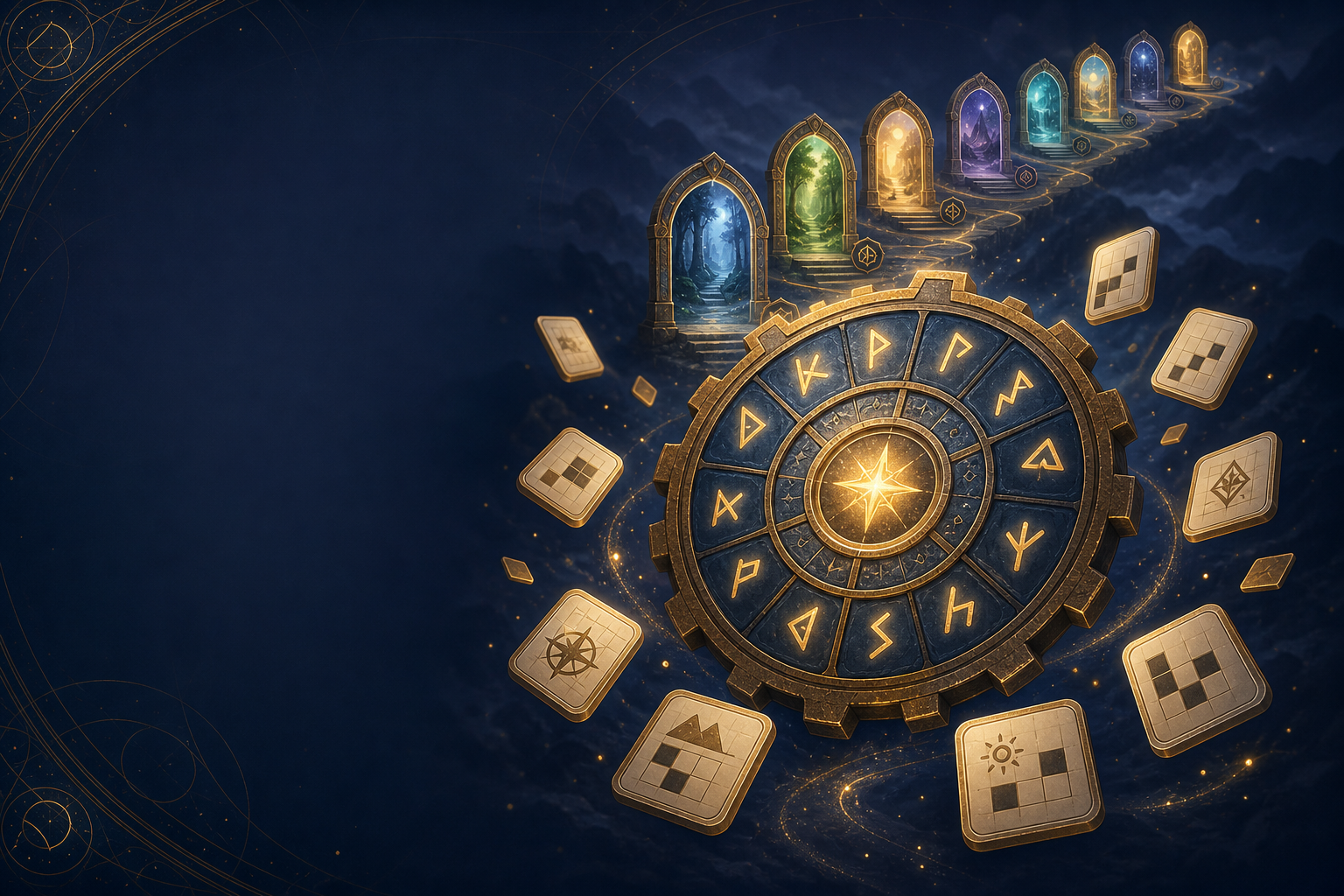
RuneWords is designed for iPhone players who want word games with structure, clues, and a sense of progression. Instead of focusing only on isolated letter puzzles, it combines a rune wheel solving mechanic with clue and crossword-style prompts. The game includes 1,000 bundled campaign boards across 10 themed realms, giving players a long path to work through. That makes it a good fit if you like the idea of moving through a word puzzle campaign rather than playing only one-off rounds. RuneWords also includes daily challenges, so there is a quick reason to return between campaign sessions. Coins, runes, and hints support the solving loop, while optional Game Center goals are available for players who enjoy extra objectives. it's not trying to be every kind of word game at once. Its appeal is more specific: clue-guided solving, a rune wheel, themed realm progression, and plenty of built-in boards for players who like having a clear path forward.
A quick checklist for choosing a word game
If you are deciding between several word games, use this simple checklist:
- Do I want quick daily puzzles or a longer campaign?
- Do I prefer finding any valid word, or solving a clue-based answer?
- Is the interface readable on my phone?
- Does the game offer enough puzzles for how I like to play?
- Are hints helpful without removing the challenge?
- Does the theme make the experience more enjoyable?
- Will I still want to open this game after the first week? If a game answers those questions well, it's probably a strong match for your style.
Final thoughts
The best word games are the ones that fit naturally into your life. Some players want a fast puzzle with morning coffee. Others want a deeper campaign they can chip away at over time. Some love pure letter play, while others prefer clues that make every answer feel earned. If you enjoy crossword-style thinking, themed progression, and a puzzle path with plenty of boards to complete, RuneWords is worth considering. Its mix of rune wheel solving, clue-based prompts, daily challenges, and realm-based campaign progression gives it a clear place among iPhone word games: thoughtful, approachable, and just a little magical.